Henry Ford and Alexander Graham Bell were among the first to recognize that the plentiful sugars found in plants could be easily and inexpensively converted into clean-burning, renewable alcohol fuels.
While the concept is the same today as it was then, the ethanol industry has come a long way since those days. Today, sophisticated renewable fuel refineries use state-of-the-art technologies to convert grains, beverage and food waste, cellulosic biomass and other products called feedstocks into high-efficiency ethanol.
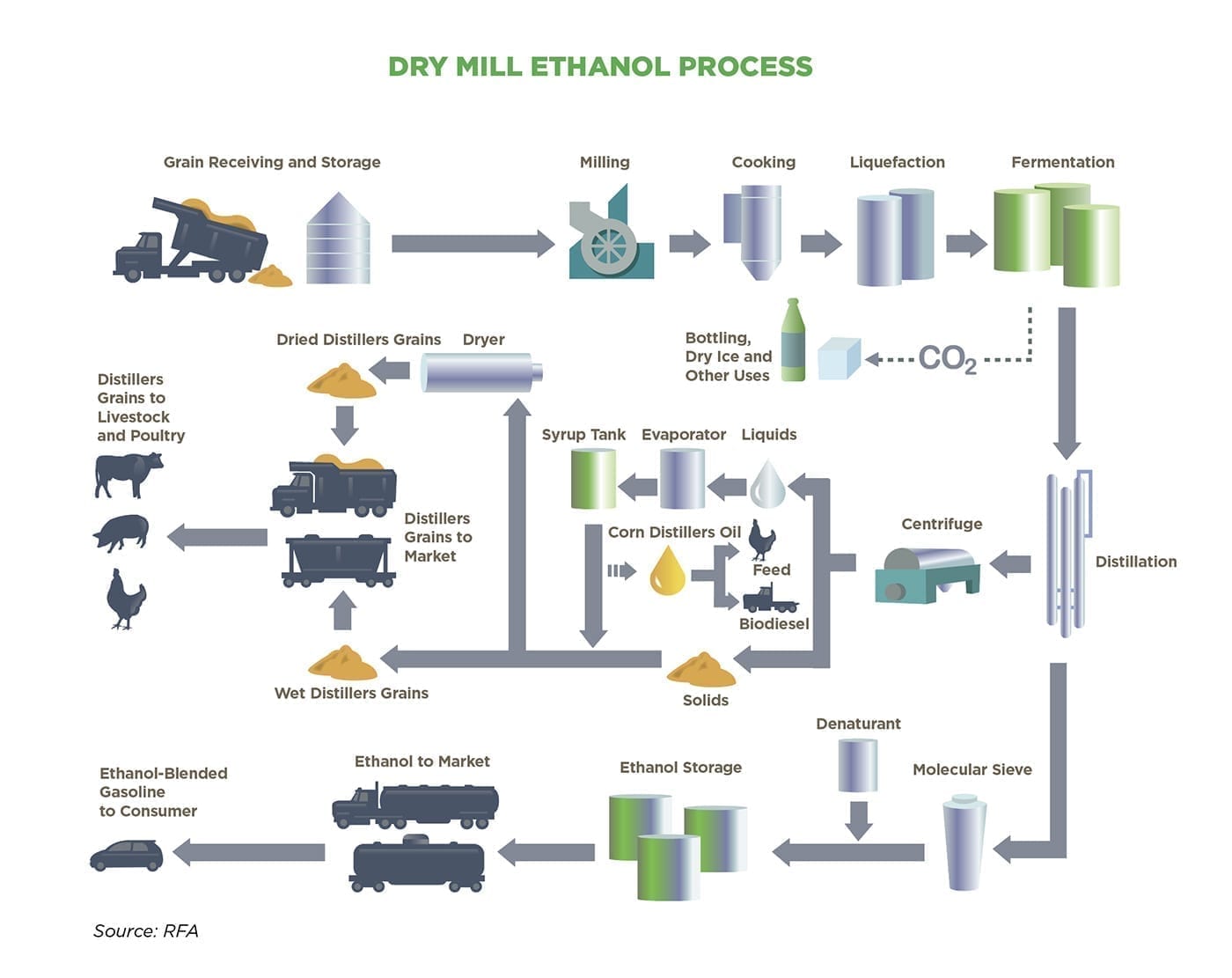
Over 90 percent of the grain ethanol produced today comes from the dry milling process, with the remaining coming from wet mills. The main difference between the two is in the initial treatment of the grain.